
Global Manufacturing’s Great Shift: A Boon for Equipment Finance
By: Brian Strachman [AVP, Product Marketing] | November 4, 2024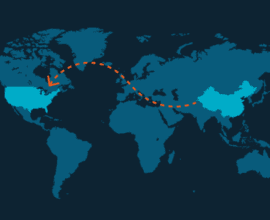
The keynote speaker at 2024 ELFA Annual Convention was geopolitical strategist Peter Zeihan. Peter has an incredible skill: he makes geopolitical strategy—which is usually as interesting as watching paint dry—entertaining. His subject is the study of how Earth’s geography impacts politics, economics, and everything from social trends to education and religion. It’s a lot to unpack, but somehow, Peter makes it fun to listen to.
Here are several key takeaways that are relevant to the equipment leasing and finance industry:
1. The US can no longer rely on China for manufacturing.
Peter believes that over the next 10 years, China will lose its ability to be a global manufacturing powerhouse. From 1979 to 2016, China implemented a one-child-per-family policy to curb population growth and boost the economy. This policy backfired significantly. Soon, there won’t be enough young people in the workforce to support the aging population. The workforce cannot keep pace with the number of retirees, causing labor costs to rise faster than any country in history.

2. Manufacturing will return to the U.S., but only in specific areas.
With China no longer the world’s go-to manufacturing hub, the industry will need to return to the United States. But that is not as easy as it sounds. For a region in the U.S. to ramp up manufacturing, it needs three things:
1. Enough open land to build on
2. Infrastructure, like a reliable power grid
3. A young, educated workforce
With those criteria in mind, Peter identified three states in the U.S. as prime candidates: Arizona, Texas, and North Carolina. If Peter is correct, the manufacturing of the following products may soon relocate to the U.S. from China:
- Electrical machinery
- Clothing
- Automobile parts
- Furniture
- Consumer goods like wallets and handbags
What does this mean for the equipment leasing and finance industry?
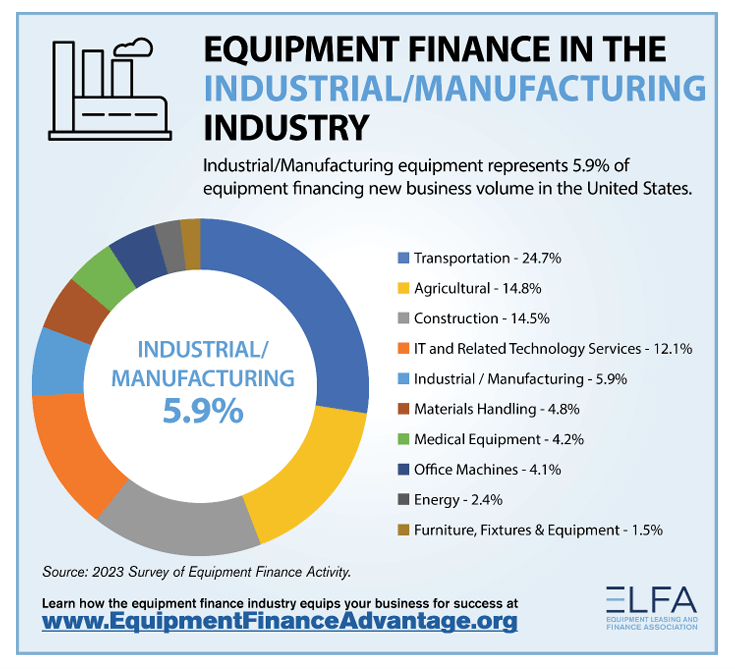
Start building a go-to-market strategy around manufacturing equipment in Arizona, Texas, and North Carolina. A good first step would be to examine the current equipment finance in manufacturing. The ELFA has some useful statistics on where this industry stands today.
As a final thought, remember that predictions like these are driven by thousands of inputs, any one of which could change and completely alter the future. Lastly, I recommend reading Peter’s materials or watching his videos on YouTube—he makes geopolitical strategy genuinely fun.